Aarhus University Seal

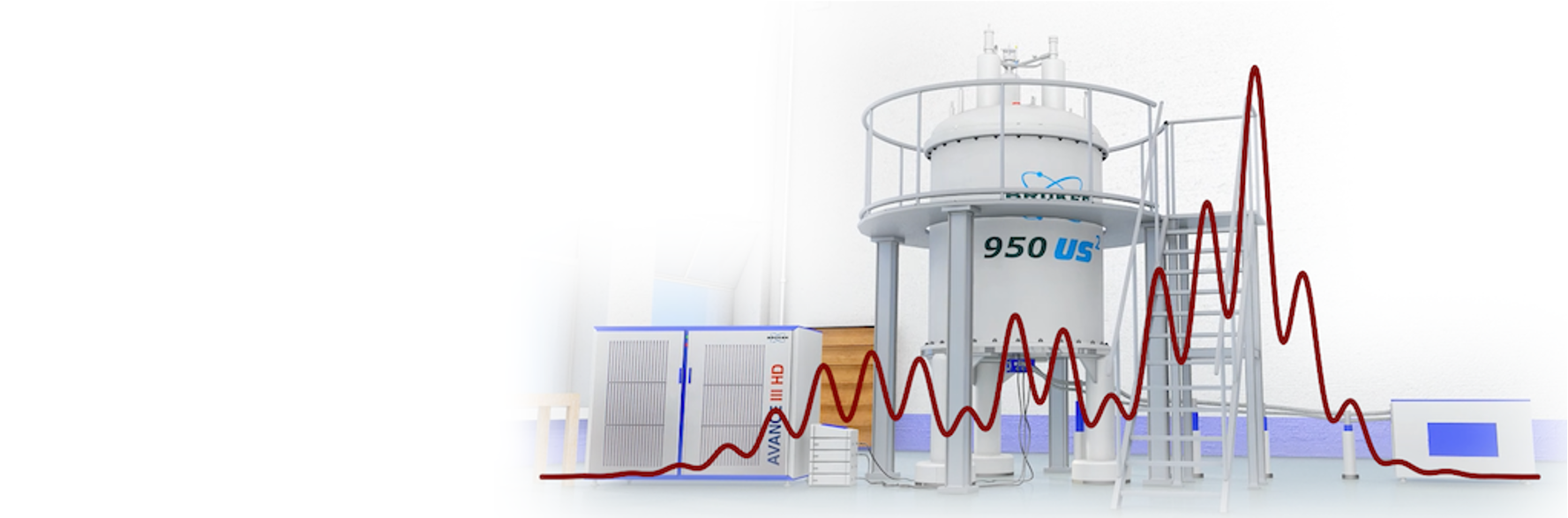
Danish Center for Ultrahigh Field NMR Spectroscopy

Danish Center for Ultrahigh Field NMR Spectroscopy

  • Interdisciplinary Nanoscience Center and Department of Chemistry

Contact

Please contact the Laboratory manager for any discussion about how to implement NMR in your project. 


Access request

The Danish Center for Ultrahigh-Field NMR Spectroscopy offers access for academic and industrial users to the instrumentation affiliated with the center. Conditions can be found here. To support primarily external users we can support travelling and access through a generous grant from the Novo Nordisk Foundation related to the upgrade of the 950 MHz instrumentation. Read more here


PANACEA

Pan-European solid-state NMR Infrastructure for Chemistry-Enabling Access


Center member

Thomas Vosegaard

Head of Department Department of Chemistry

Director

Niels Christian Nielsen

Professor Department of Chemistry

Center member

Thibault Viennet

Assistant Professor (Tenure Track) Department of Chemistry

Center member

Jørgen Skibsted

Professor Department of Chemistry

Rune Wittendorff Mønster Jensen

Academic Technical Staff Department of Chemistry

NMR Laboratory Manager

Dennis Wilkens Juhl

NMR laboratory manager Department of Chemistry

NMR Engineer

Oleg N. Bakharev

Academic Technical Staff Department of Chemistry

NMR manager

Anders Bodholt Nielsen

Academic Technical Staff Department of Chemistry

Four individual research groups constitute the core of the High-field NMR center showing a broad application of NMR within Natural sciences. Please visit the websites of the individual groups below. 
Thomas Vosegaard

Molecules in action: Using NMR to study molecular structure and dynamics

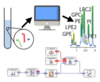
In our group we use NMR to study the structure and dynamics of various molecules, including membrane proteins and their interaction with lipids.

The study of lipids includes development of lipidomics methods to identify and quantify lipids in complex mixtures from various sources.

We are developing state-of-the-art software and algorithms to analyse NMR spectra and understand NMR experiments.

Finally, we are devoted to provide the best possible education of the next generation of NMR experts through development of novel technologies for teaching spectroscopy at all levels.

Thomas Vosegaard

Head of Department Department of Chemistry

Jørgen Skibsted

Solid-state NMR in inorganic chemistry: developments of new sustainable materials


Our research focusses on applications and developments of solid-state NMR in structural studies of inorganic materials. The main attention is given to less-crystalline and amorphous systems, guest-ion incorporation in functional materials and quantitative experiments in studies of reaction kinetics.
   A major research area is the development of new sustainable cement-based materials, which will be produced with a substantial reduction in CO2 emissions. In addition, we explore carbonation of minerals and re-carbonation of end-of-life concrete as Carbon Capture and Utilization (CCU) approaches to capture and store CO2 on a geological time scale.
   Other research topics include heterogeneous catalysts and zeolites (for production of bio-fuels), glasses, and borohydrides for hydrogen storage and for ion conductors in battery materials.

Jørgen Skibsted

Professor Department of Chemistry

Niels Christian Nielsen

Designing and applying advanced pulse methods in NMR, DNP, EPR, and MRI

Our aim is to develop and apply advanced methods in magnetic resonance to obtain information about structure, dynamics, and interactions of molecular species. This includes biological solid-state NMR, magnetic resonance micro imaging (MRI), low-field NMR sensors, and hyperpolarization methods to boost sensitivity by orders of magnitude. This involves projects spanning from groundbreaking quantum mechanics, optimal control and numerical design of advanced pulse methods towards pure applications where the use of advanced methods provides the entry to unique information about structure and dynamics, e.g. in membrane proteins, amyloids, and catalytically active materials.

Niels Christian Nielsen

Professor Department of Chemistry

Thibault Viennet

Illuminating regulatory mechanisms in the dark proteome

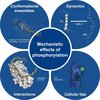
My group focuses on elucidating how post-translational modifications such as phosphorylation regulate proteins at the atomic scale. We use solution NMR and other biophysical techniques, as well as chemical biology and cell biology to characterize the effect of phosphorylation on protein disordered region conformations, dynamics, and interactions. I am driven by interesting biological questions but my interests also include NMR methodology and chemical biology approaches.

Thibault Viennet

Assistant Professor (Tenure Track) Department of Chemistry