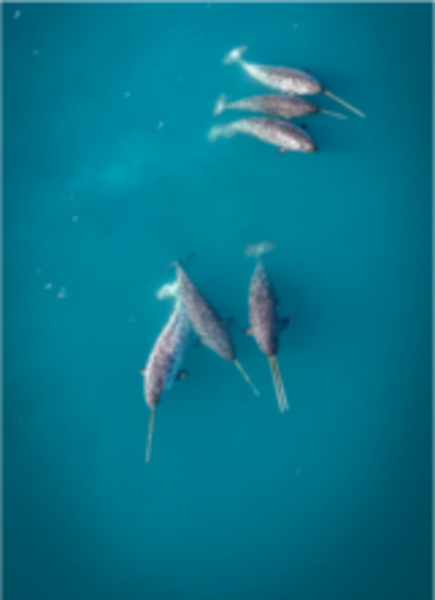
A group of male narwhals in Inglefield Bredning, Northwest Greenland, 2021. Credit Carsten Egevang, Greenland Institute of Natural Resources.
About 1% of narwhals have not only one but two tusks. A double-tusked narwhal was filmed from a drone near Qaanaaq, Northwest Greenland, June 2021. Credit: Jens Ascanius.
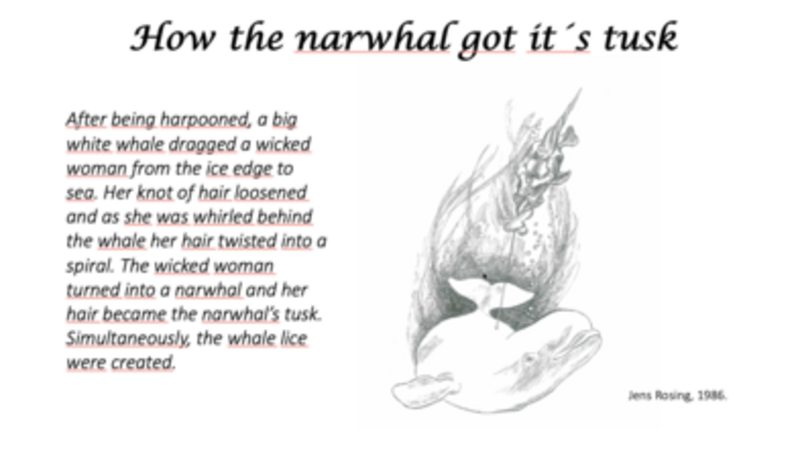
The Greenlandic legend of how the narwhal got its tusk. From "The Unicorn of the Arctic Sea," by Jens Rosing, 1986.
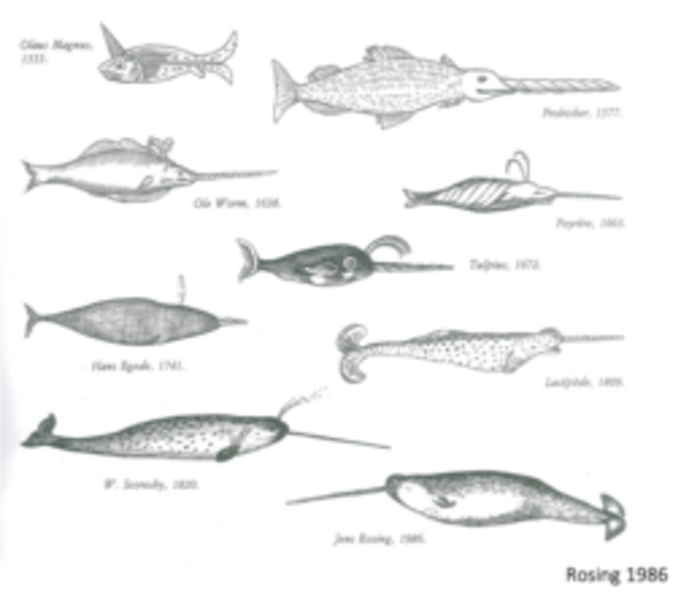
Drawings illustrating “the owner” of the tusk through history. It was the Danish Physician and scientist Ole Worm that was the first to scientifically describe the true owner of the tusk as an Arctic whale – a marine mammal with a very long tooth. From "The Unicorn of the Arctic Sea," by Jens Rosing, 1986
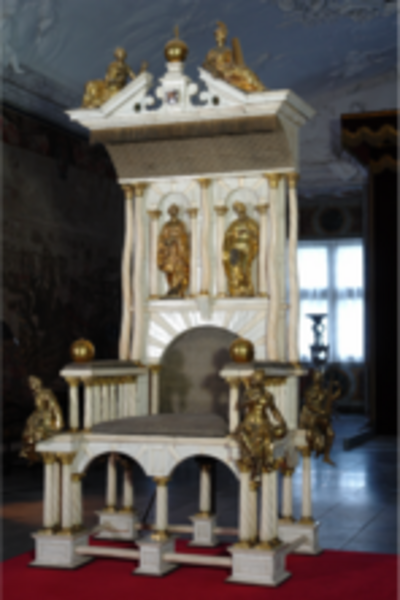
The coronation chair of the Danish Kings, used at coronations between 1671-1840. The chair was said to be made up of “unicorn” horns, which in reality are tusks from the narwhal.
The Greenland Institute of Natural Resources collection of narwhal tusks used in e.g. the NordForsk project.
Narwhal skull with tusk and lower jaw placed on top of the skull. The narwhal was caught in the Inuit hunt of narwhals, Qaanaaq, Northwest Greenland, 2008.
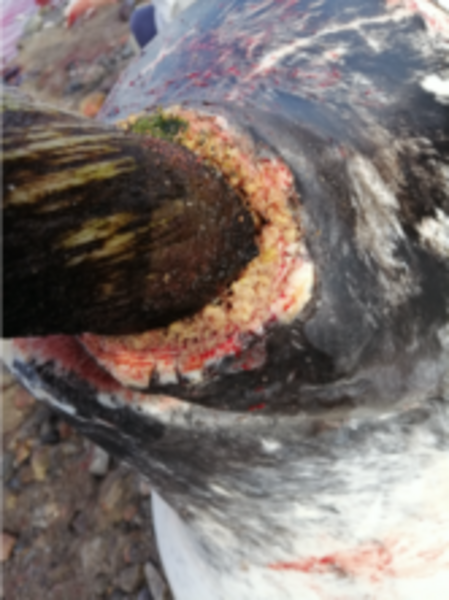
Narwhal tusk protruding from the upper jaw with whale lice where the tusk penetrates the skin.
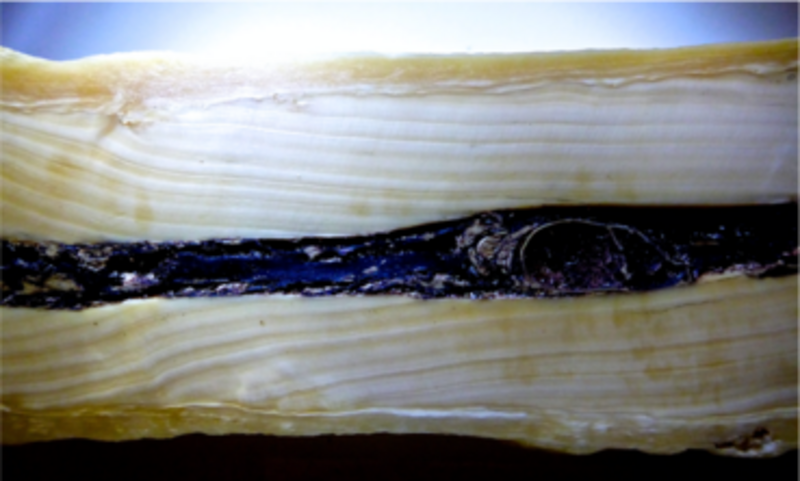
A sectioned narwhal tusk revealing annual growth layers of which we can extract information on elements, isotopes, 14Carbon and hormones.
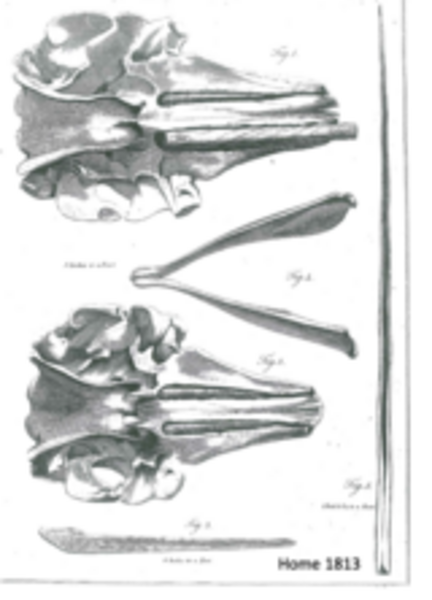
Illustration of a narwhal skull with the location of embedded teeth within the upper jaw and a tusk protruding from the jaw. From Home E. 1813. On the tusks of the Narwhal. Philos Trans R Soc London 103: 126– 130.