
Professor, dr.phil. Svend Erik Rasmussen (1925–2026)
Professor, Dr.phil. Svend Erik Rasmussen passed away on April 3, 2026, at the age of 100. Svend Erik was one of the original professors at the founding of the Department of Chemistry in 1960, and he left a tremendous mark on both Aarhus University and Danish chemistry.
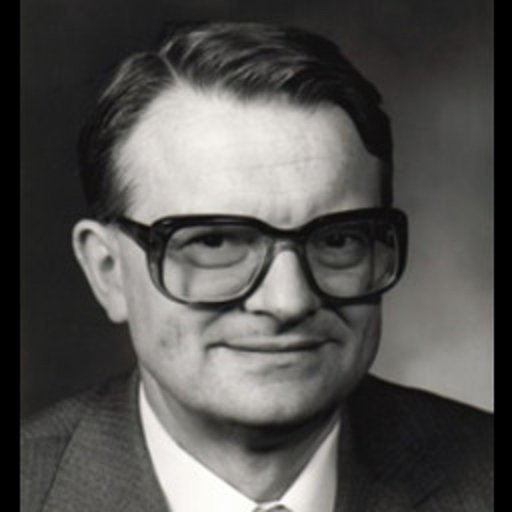
Svend Erik was born on November 19, 1925, in Esbjerg, and earned his mag.scient. degree in chemistry from the University of Copenhagen in 1950. After shorter employments at the Royal Veterinary and Agricultural University and the University of Copenhagen, he spent a year studying at Queens College in Dundee before being hired at the Technical University of Denmark (now DTU) in 1952. He became professor of inorganic chemistry at Aarhus University in 1959, where he established many research fields until his retirement in 1995. After his formal retirement, he continued his academic work as professor emeritus at the Department of Geoscience until 2017. He was elected to the Royal Danish Academy of Sciences and Letters in 1981.
Svend Erik earned his Higher Doctoral Degreein 1960, and his research focused especially on crystallographic studies of inorganic compounds. He was an early adopter of computer calculations in chemical research, and it was under his leadership that Danish crystallography flourished in the 1960s and 1970s and gained significant international recognition. The measurement of precise X‑ray diffraction data made it possible to determine the atomic structures of molecules and crystals, forming a foundation for modern chemistry by enabling quantitative identification and discussion of diverse chemical interactions. In those years, the inorganic division used a dedicated motorcycle courier to transport punch cards and data tapes to Tirstrup Airport, from where they were flown to the Danish electronic computer in Copenhagen to compute the many crystallographic Fourier transformations.
By hiring outstanding scientific and technical staff, Svend Erik’s inorganic division built an extensive instrument park and a high level of research activity, especially within solid‑state chemistry. He established the department’s strong tradition of exceptional mechanical and electronics workshops for the development of unique scientific equipment.
With early vision, he also involved Aarhus University in the use of the DR3 nuclear reactor at the Risø research center by securing funding and personnel to build and operate a neutron diffractometer there for advanced crystallographic research. Later, Svend Erik was the driving force behind the creation of an independent analytical chemistry division at the department. At a time when the scientific work of permanent staff was financed through annual appropriations, Svend Erik was exceptionally skilled at supplementing activities by securing external research funding.
He always sought new paths and established close contacts with Danish industrial companies, for whom he carried out advanced scientific measurements as contract research.
Svend Erik had strong ties to French research environments, and in 1980 he was appointed Officier dans l’Ordre des Palmes Académiques. As a student, one directly experienced his insistence on classical education and broad cultural outlook, as he often taught using chemistry textbooks in English, German, or French. For many years he contributed to public science communication as the author of a large number of articles in Den Store Danske Encyklopædi and Lex. Svend Erik had an extensive international scientific network and held several positions of trust, including serving as Secretary General of the International Union of Crystallography. He never spoke loudly, but he had a remarkable ability to make people listen to his quiet voice.
Privately, Svend Erik was married to Dorrit from Finland for 73 years, and they lived closely together throughout a long life. They were both excellent skiers, and even well into their eighties they could often be found on European alpine slopes.
Svend Erik Rasmussen leaves behind an impressive scientific legacy, and we remember with sorrow a curious, courageous, and dedicated researcher and teacher of chemistry, an outstanding academic leader, a person of deep loyalty to others, and someone whose tireless efforts greatly benefited Aarhus University.
Honoured be his memory.