Global warming is occurring three times faster in the Arctic compared to the rest of the World. Many parameters affect the Arctic climate, including marine volatile organic compounds (VOCs). Marine VOCs are oxidized in the atmosphere forming aerosols. Globally, aerosols have a net cooling effect due to their ability to scatter light and their implication on formation and lifetime of clouds. However, the implications of aerosols on the Arctic climate remain unknown. By improving the knowledge of aerosols and precursors, better inputs can be made in climate models which can determine their implication on the Arctic climate as well as improve future predictions of the climate.
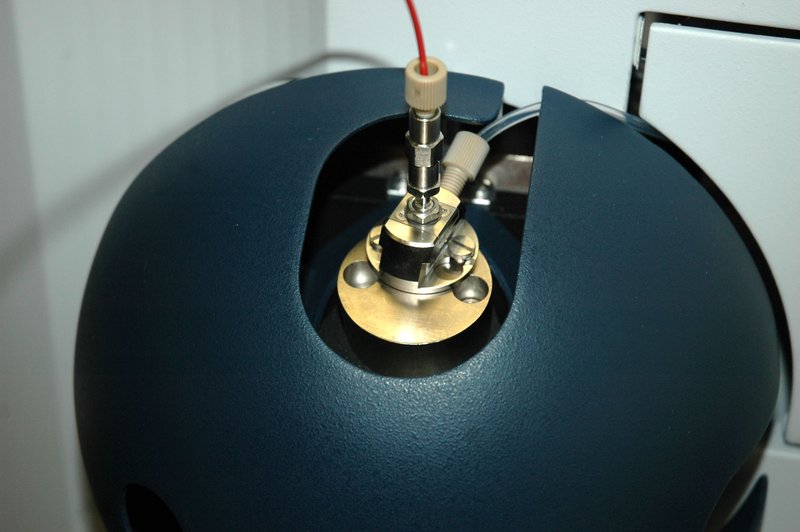
We investigate Arctic marine aerosol and water samples using liquid chromatography coupled to mass spectrometry (LC-MS) and VOCs using thermal desorption gas chromatography coupled to mass spectrometry (TD-GC-MS).
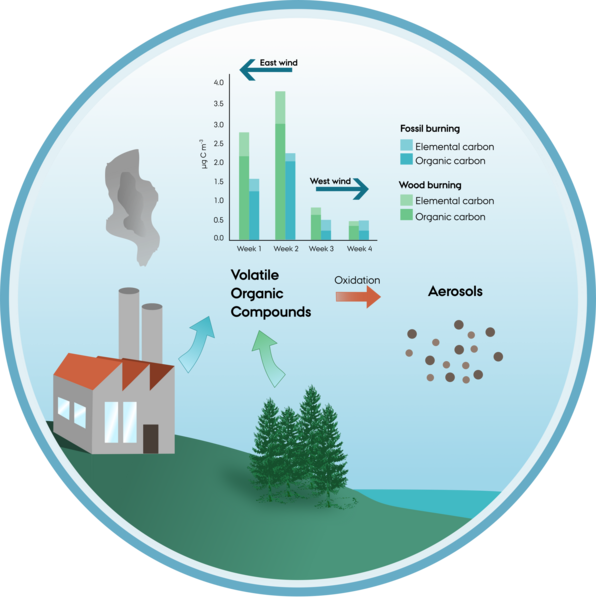
Aerosols affect the radiation budget of the Earth by scattering of sunlight as well as affecting cloud formation and lifetime. In addition they may have detrimental health effects. The organic fraction of aerosols is the most complex and least understood. We investigate the sources and chemical composition of organic aerosols in relation to both their climate and environmental effects.
We have developed specific analysis methods of organic trace compounds in aerosols using high-performance liquid chromatography coupled to quadrupole time-of-flight mass spectrometry (HPLC qTOF-MS). We apply these methods to both laboratory and field studies of aerosol processes in collaboration with national and international research groups.

Plastic pollution is widely distributed in the environment and has been detected in oceans, rainwater, freshwater, lake sediments, soil, wildlife and in the human body. Recently, the presence of airborne microplastic particles has been discovered. However, sources and concentrations of atmospheric microplastics are poorly understood. A new hypothesis is that the ocean may act as a source of airborne microplastic particles via sea spray generation.
We are developing an analytical method to detect and quantify micro- and nanoplastics using pyrolysis gas chromatography coupled to mass spectrometry (py-GC-MS), and apply this method to investigate ocean-atmosphere transfer of microplastics.
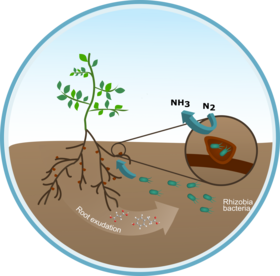
Understanding how plants recognize each other is a crucial step in determining plant-plant communication dynamics and can tell us how competitive traits evolve in plants, which has implications in both natural and agroecological contexts. In the context of MSCA funded project KNOWN (Know Thy Neighbor), we have developed a methodology for metabolic profiling of root exudates for a large number of natural Arabidopsis thaliana genotypes using ultra-high performance liquid chromatography coupled with mass spectrometry (UHPLC-QTOF-MS).
This knowledge will ultimately be used for investigating the role of root exudates as signals involved in plant belowground interactions. Understanding this link between plant-plant recognition and responses can be ultimately exploited to design efficient crop variety mixtures with high yield potential owing to cooperative interactions.
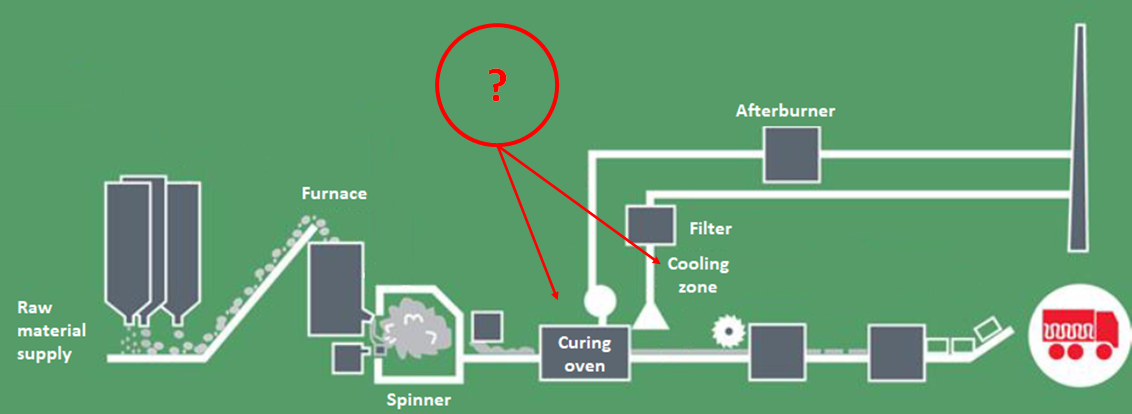
A transition toward more sustainable, green and environmentally friendly technologies in the production of insulation materials, is an ongoing topic in ROCKWOOL Group. In particular, the development of new lignin-based binder, for mineral wool products, is being conducted. In addition to the evaluation of the physicochemical properties, the understanding of the emissions profiles is integral for putting novel materials into use.
In this collaborative project between ROCKWOOL Group and Aarhus University we aim to obtain further insights into the chemical composition of the volatile organic compounds formed and emitted during the high temperature curing of the binder as well as into degradation products during specific conditions of use of the formed mineral wool product with the help of advanced analytical techniques such as gas and liquid chromatography coupled to mass spectrometry. Due to careful choice of its constituents, the novel binder is expected to have a more benign emission profile and lead to greener production environment. This project is needed to investigate said assumption and to quantify the extent of changes. Improved understanding of the emission profile will facilitate binder implementation in the production and ascertain that existing legislation is being followed.