
Two Villum Experiment grants for researchers at the Department of Chemistry
Congratulations to Professor Marianne Glasius and Professor Duncan Sutherland, who have each received a Villum Experiment Grant for their projects “An unknown source of surfactants in the Arctic environment” and “Multivalency as a patterning approach”, respectively.
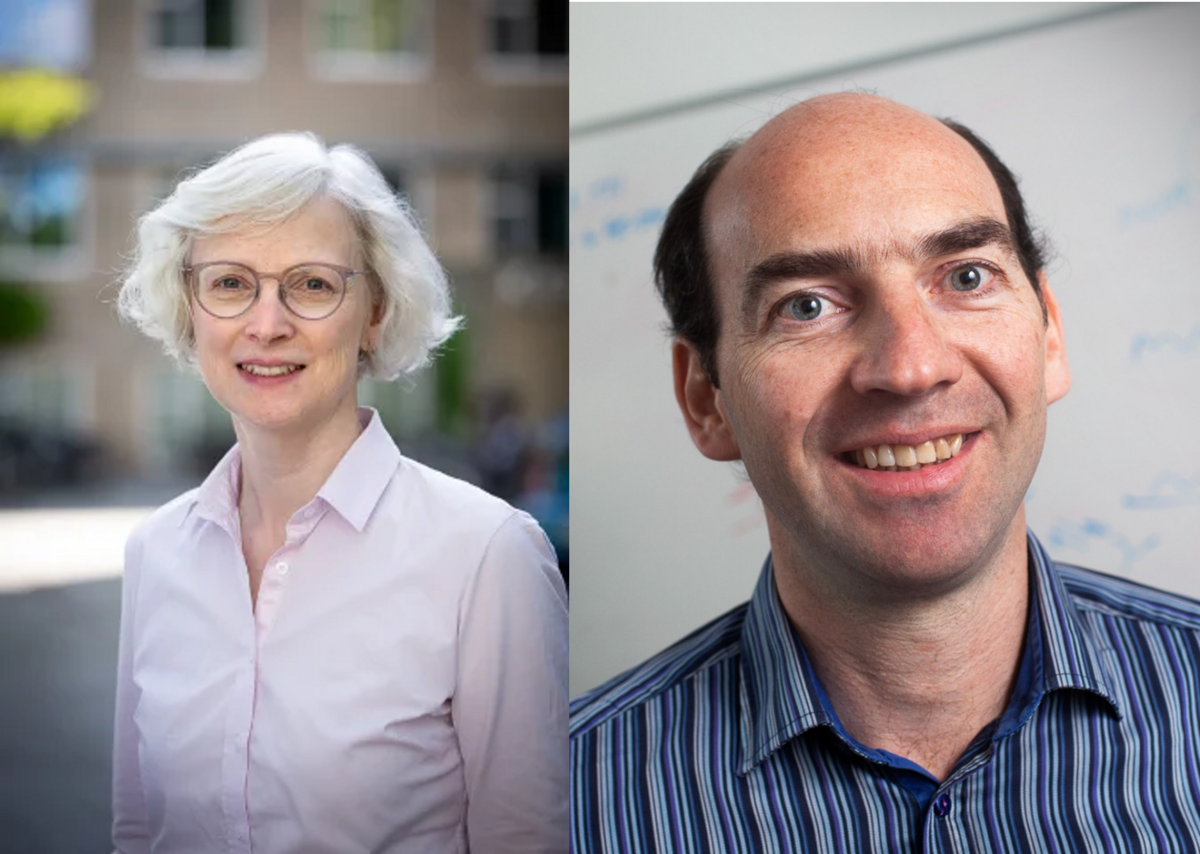
Through the Villum Experiment programme, the foundation takes a chance on bold and potentially risky ideas that fall outside traditional research frameworks. These ideas may help answer long-standing scientific questions, provide new understanding of central topics, open entirely new areas of research, or lay the foundation for novel methods and technologies.
An unknown source of surfactants in the Arctic environment
Professor Marianne Glasius will use her Villum Experiment grant to investigate previously unknown group of surface-active, soap-like compounds discovered in the Arctic environment. Their origin remains unknown and cannot be explained by our current understanding of marine chemistry, atmospheric chemistry, or environmental pollution.
“We discovered these novel compounds during a research expedition in the Greenland Sea and are excited to explore their origin further”, says Marianne Glasius.
The project will explore whether these compounds could be formed through a previously unknown chemical transformation of pollutants. Surface-active compounds may represent a previously overlooked form of pollution with implications for environmental and climate-related processes in the Arctic, making it particularly important to understand their role as the region undergoes rapid climate change.
Multivalency as a patterning approach
Professor Duncan Sutherland’s project will explore how the principles of multivalency can be used to position and integrate molecules and nanoparticles into nanoscale devices with high precision. Modern cleanroom technology can produce devices with gaps as small as 1–5 nanometres but placing molecules or nanoparticles accurately within these tiny structures remains a major challenge. Inspired by nature, where multiple interactions can guide objects towards the correct position, the project will use multivalency to develop a more reliable approach to nanoscale patterning and integration.
"Adapting approaches evolved by nature to address challenges in modern nanofabrication can help both to understand how molecular placement in biology functions and overcome one of today’s technological barriers", says Duncan Sutherland.