Assistant Professor
Building 1513-421
ORCID: 0000-0002-7059-6765
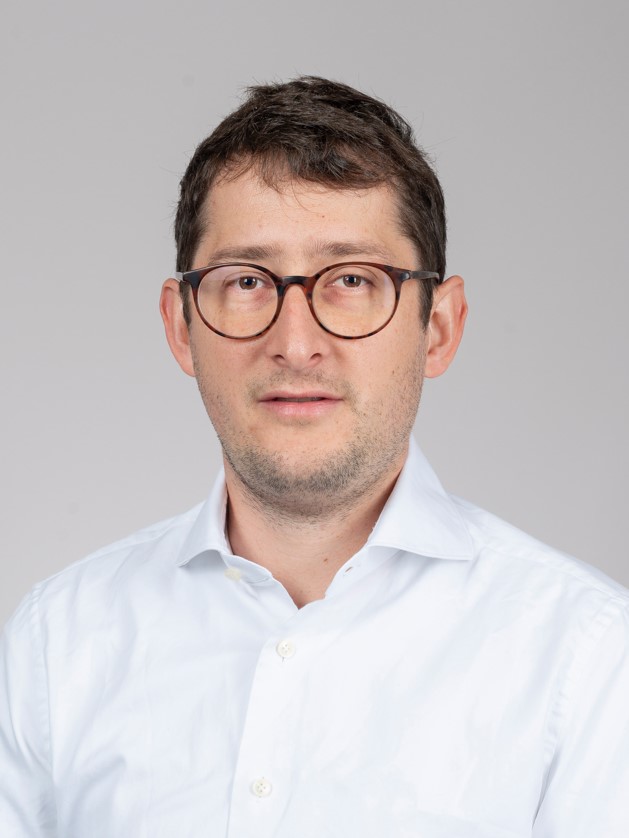
Fabian received his BSc in Environmental Sciences and his MSc in Atmospheric and Climate Science from ETH Zürich, where he studied the composition of atmospheric aerosol particles using mass spectrometry tools.
After a research stay at the Massachusetts Institute of Technology, Fabian got his PhD in cloud physics from ETH Zürich in 2019, where he developed techniques to investigate the ice nucleation abilities of soot aerosols. Following a Marie Skłodowska Curie postdoctoral fellowship at the University of British Columbia and the Paul Scherrer Institute, where he worked on physical chemistry of organic aerosol particles with a focus on aerosol phase behavior, he joined the Department of Chemistry at Aarhus University in March 2024 as assistant professor.
Fabian has been awarded the Master Thesis Grant from the Karl Zeno Schindler foundation (2015) and the Prix Schläfli in Geosciences (2021) from the Swiss Academy of Sciences.
Ongoing research interests in Fabian´s group include the phase behavior properties of atmospheric organic aerosol particles and the mechanisms of atmospheric ice nucleation and droplet activation in clouds. The goal is to mechanistically understand aerosol and cloud processes and quantify their role in our atmosphere.
Click on a picture of a group member below to go to their PURE profile and obtain their contact information.
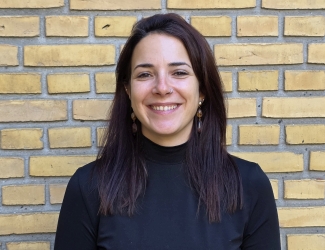
Sneha received her PhD degree in Environmental Science (2025) from Stockholm University, Sweden. During her doctoral studies she investigated the molecular-level chemical composition of both fresh and aged sea spray particles, an important class of tropospheric aerosols using chemical ionization mass spectrometry. Her research also explored gas-particle partitioning of acidic molecules from sea spray aerosol particles. Additionally, she serves as the President of the ECA Board at the Nordic Society for Aerosol Research (NOSA). Sneha joined the Aarhus University in early 2026. Here, her research will focus on ice nucleation of aerosol particles and on exploring their viscosity.
Maria received her PhD degree in Physical Chemistry (2021) from the University of Crete, Greece, where she focused on gas-phase kinetics and the oxidation mechanisms of furans, that are often emitted into the atmosphere by biomass burning. Afterwards she was a postdoctoral fellow at CNRS in Lyon, France, where she worked on heterogeneous chemistry and interfacial processes at the air–water interface of aerosol particles and droplets. Maria joined the Aerosol and Cloud Microphysics group in 2025. In Aarhus, Maria’s research will focus on the properties of secondary organic aerosols produced through the oxidation of biogenic and anthropogenic volatile organic compounds with nitrate radicals and link that to their ability to form clouds.
Daniel received his BSc (2022) and MSc (2024) in Chemistry from Aarhus University, where he worked on topics related to computational atmospheric chemistry. His bachelor’s thesis explored the role of organic acids in new particle formation, while his master’s work combined automated computational frameworks for reaction kinetics and machine learning to study properties of molecular clusters and gas-phase biogenic precursors. Daniel joined the Aerosol and Cloud Microphysics group in 2025, where his current research is focused on investigating molecular diffusion and oxygen availability in organic aerosol particles and investigating their impact on reactivity.
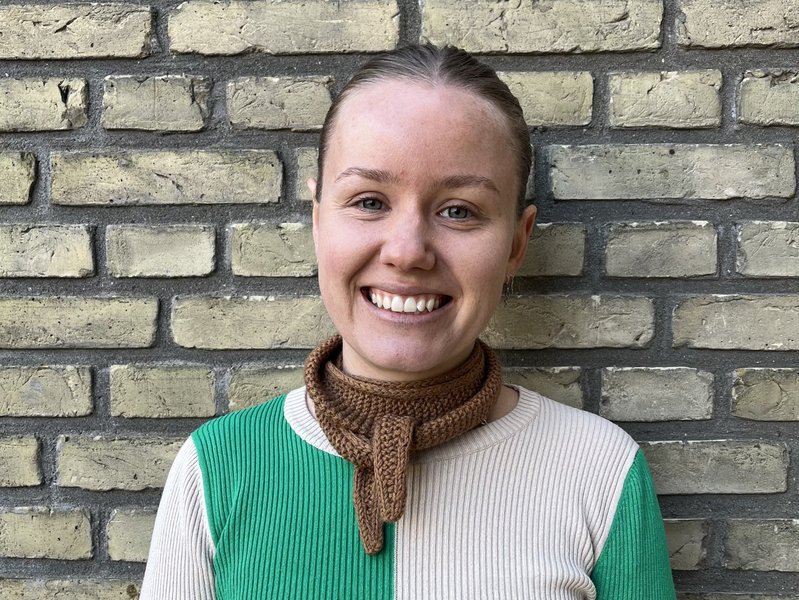
Celine received both her BSc (2023) and MSc (2025) in Chemistry from Aarhus University, where her research projects focused on analytical atmospheric chemistry, using liquid and gas chromatography coupled to mass spectrometry. In her bachelor’s thesis, she quantified carboxylic acids in aerosols collected in China to investigate their potential sources. In her master’s thesis she studied the chemical composition of volatile organic compounds and aerosols collected in the Arctic. After working as an AC-TAP at the Department of Biological and Chemical Engineering, Celine joined the group as a PhD student in April 2026. Her current research is focusing on aerosol-water interactions of different aerosol types. A particular focus is to understand water uptake of organic aerosols on their way to form clouds and link the particle hygroscopicity to their phase behavior.
Nele is a visiting student from the University of Potsdam (Germany), enrolled in their physics MSc degree program. In her bachelor thesis and subsequent research projects at the Alfred-Wegener Institute she investigated the microphysical properties of Arctic aerosol derived by lidar data – with a special emphasis on their hygroscopic growth. She joined the Aerosol and Cloud Microphysics Group via the Erasmus study exchange program in autumn 2025 and will conduct research for her master thesis with us. Here, her research will focus on the liquid-liquid phase separation in aerosol particles, a property that is key to understanding their impact on e.g., atmospheric chemistry and climate